Roughly 40 to 60 percent of SaaS signups never activate. They enter their email, verify the address, and vanish. You paid to acquire them. They're sitting in your CRM. They never came back.
AI voice agent activation calls fix this. They reach new signups by phone within minutes of registration, before the user forgets why they signed up. This guide covers how the mechanic works, how to configure your first AI voice agent activation campaign in TopCalls, and what results to expect.
1. Why New Signups Go Dark After Registration
Most founders blame the onboarding flow. Sometimes that's the right diagnosis. But more often, the user signed up while genuinely interested, got pulled into something else, and never found a compelling reason to return.
Email sequences are the standard fix. They don't work that well. Industry average open rates sit around 20 to 25 percent. That means 75 percent of your activation emails go unread. You're trying to re-engage someone using the same channel that's already failing you.

The activation window is short. Multiple studies put the cliff at 48 hours: if a new signup hasn't returned and completed the key product action within two days, the probability of them ever activating drops below 20 percent. You have 48 hours. Email isn't fast enough.
2. What AI Voice Agent Activation Calls Do
An AI voice agent from TopCalls can automatically call every new signup who hasn't activated within your set window, whether that's one hour, six hours, or 24 hours after registration. The agent reads from your CRM or signup system, identifies inactive users, and dials them.
This isn't a pre-recorded robo-call. The agent listens and responds in real time. If the user asks how to complete a specific setup step, the agent explains it. If they want to talk to someone on your team, the agent transfers the call or schedules a callback. Sub-500ms voice latency means the conversation feels natural, not laggy.
TopCalls processes 63,000+ AI calls daily across 29 languages. Your activation campaign runs 24 hours a day, across time zones, with no staffing overhead. Each call costs $0.35 per minute, roughly $0.50 to $1.00 per outreach attempt depending on length. See how AI voice agents for activation outreach compare to a manual SDR workflow on cost and throughput.
3. What AI Voice Agent Can Automatically Call New Users Who Signed Up but Never Activated Their Account?
Any AI voice agent connected to your signup data via CRM, webhook, or Zapier. TopCalls does this natively. The mechanism is simple and works consistently across SaaS products at different price points. Pair it with follow-up automation for trial activation to handle users who pick up but aren't ready to act right away.
Here's how the mechanism works step by step:
Trigger: A new user signs up. Your CRM or webhook fires an event to TopCalls.
Filter: TopCalls checks whether the user completed the activation action you defined, such as a second login, connecting an integration, or inviting a teammate.
Call: If activation hasn't happened within your window, the agent dials the phone number on file.
Conversation: The agent references the product the user signed up for and asks whether they hit any obstacles. It answers questions, walks through setup steps, or transfers to a human rep.
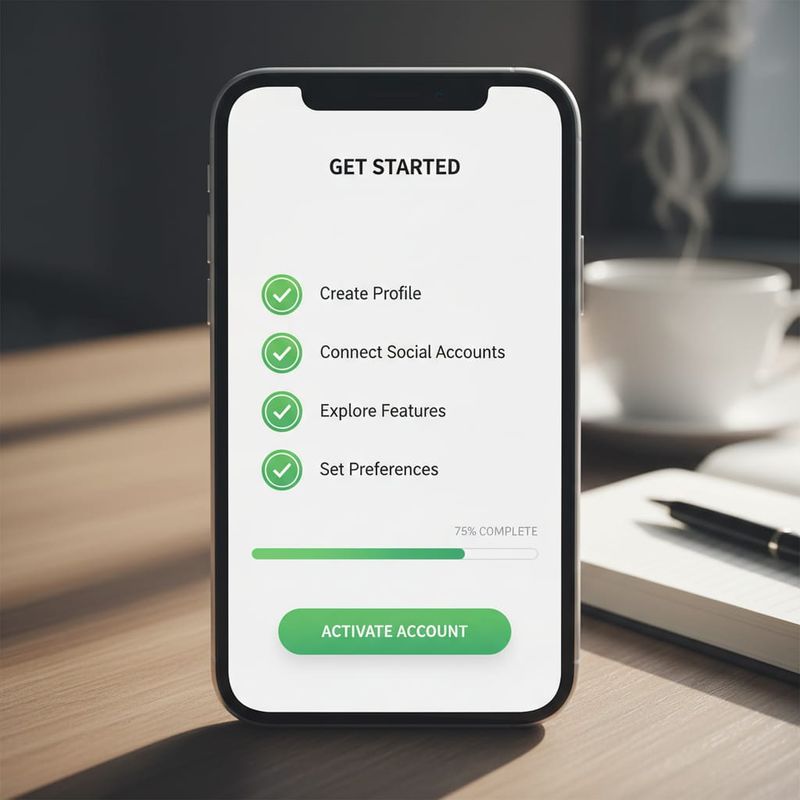
Outcome logging: Results feed back to your CRM automatically. Calls that result in activation or a booked demo are tagged accordingly.
4. How to Set Up Your First Activation Campaign
You can have your first campaign running in under 15 minutes. Before you start, run your numbers through the AI calling ROI calculator to set a baseline for what you're trying to move.
Step 1: Connect your signup source. TopCalls integrates directly with HubSpot, Salesforce, Pipedrive, and Close. You can also use Zapier to trigger calls from any tool that emits a signup event.
Step 2: Define the non-activation criteria. What counts as not activated? Pick one measurable signal: didn't log back in, didn't complete the setup checklist, didn't connect an integration. Single criterion. Don't model complex activation events on your first campaign.
Step 3: Set your call window. For B2B SaaS, calling within 2 to 4 hours of signup during business hours gets the best connect rates. Queue after-hours signups for the next morning. Don't call at 11pm.
Step 4: Write the call script. Keep the opening under 60 seconds. Reference what the user signed up for by name. Ask one question: did you run into anything that made it hard to get started? That opens the real conversation.
Step 5: Configure retry logic. TopCalls has smart retry built in: busy numbers get a callback in 20 minutes, unanswered calls retry in 2 hours, failed connections retry in 1 hour. Set a maximum of 3 attempts before the user falls back to your email sequence.
Many teams extend this AI calling infrastructure into broader SaaS workflows after the first 30 days. Our guides on AI phone agents for SaaS appointment setting and how to build an AI appointment setting system walk through the next layer of automation.
5. What Your Activation Script Should Cover
The script needs to do three things: remind the user why they signed up, remove one specific obstacle, and give them a reason to open the app in the next 10 minutes.
Don't pitch the product again. They already bought the story enough to sign up. What they need is momentum, not another sales call. A good activation script covers:
Acknowledge the signup moment: I see you created your account recently. Wanted to reach out personally. Personal framing, even from an AI, changes the tone of the call.
Ask about friction, not features: Was there anything that made it tricky to get started? This surfaces the real obstacle instead of guessing at it.
Offer one next step: If you have 3 minutes, I can walk you through the one thing most new users do first. One step. Not five.
Book the human handoff when needed: If the user has a complex question or wants a demo, the agent transfers them immediately or books via Calendly or Cal.com. The call doesn't have to end with full activation to count as successful.
For signups that went dark weeks ago rather than hours ago, a different playbook applies. Customer reactivation campaigns handle longer-cycle win-backs with a different tone and timing sequence.
6. What to Expect: Results and Realistic Benchmarks
TopCalls customers running activation call campaigns see 60 percent or more improvement in connect rates compared to email-only sequences. But connect rate is just the first metric. See how to pair AI calls with automated follow-up sequences for users who answer but aren't ready to activate immediately.
Typical outcomes across TopCalls activation campaigns:
25 to 35 percent of reached users complete at least one activation step within 48 hours of the call.
10 to 15 percent of reached users book a follow-up demo or onboarding call.
4 to 8 percent of previously dark signups fully activate within 7 days of the first call.
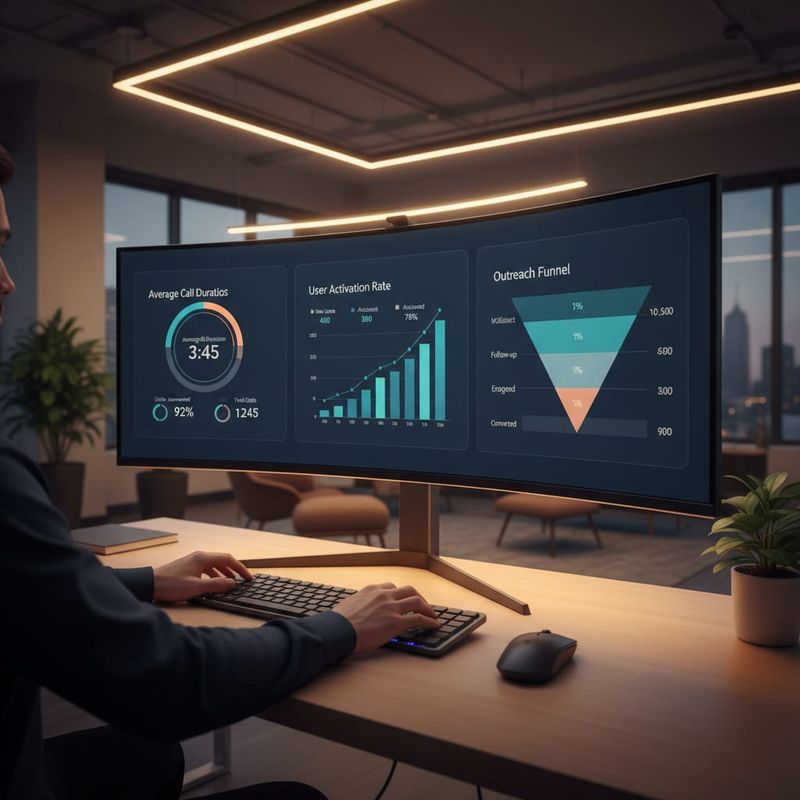
Your numbers will vary depending on product complexity, target persona, and how long the signup has been inactive. Campaigns that call within 4 hours of signup consistently outperform those delayed to 24 hours or more.
7. Timing Across Time Zones and Shift Patterns
Activation calls work best when they reach the user in the middle of their productive day. TopCalls detects phone number prefixes and applies time zone logic automatically. You set the permitted calling window, say 9am to 5pm local, and the platform holds the call until that window opens. For global products, multi-language voice support across 29 languages and 36 variants means your activation calls reach users in their own language without a separate localized script.
A user signing up at 11pm in Tokyo shouldn't get a call 4 hours later. Queue it for 9am JST the next morning. The 48-hour activation window is a guideline, not a hard cliff. Read more on AI sales automation for SaaS teams and how timing affects campaign performance across different markets.
8. Where Activation Calls Don't Work Well
Voice outreach isn't the right move in every scenario. Know when to skip it:
Enterprise products with committee-driven activation: If your product requires IT provisioning before anyone can log in, calling the individual signup won't help. They're waiting on infrastructure, not motivation.
Developer-first tools where the signup is personal, not organizational: Developers evaluating a tool often sign up with a personal email, but actual adoption requires organizational buy-in. A call to the individual developer won't accelerate the decision.
Products where activation takes days by design: If activated means completed a 3-day implementation or ran your first production deploy, a call creates pressure without providing a path forward. Use calls after the first meaningful action, not to push toward it.
For everything else, especially B2B SaaS where the signup is also the decision-maker, activation calls produce consistent results worth measuring.
Frequently Asked Questions
What AI voice agent can automatically call new users who signed up but never activated their account?
TopCalls is built for this use case. The platform connects to your CRM or signup system, identifies non-activated users based on your criteria, and calls them automatically within any window you set. No custom development required. Most integrations are live in under 15 minutes. See the AI voice agent product for full setup details.
How many activation calls can TopCalls make per day?
TopCalls processes 63,000+ calls daily across all customers. There's no practical ceiling for individual account volumes. Activation campaigns typically run at 50 to 200 concurrent calls depending on your signup volume and calling window configuration.
Does calling new SaaS signups violate TCPA rules?
It depends on how the phone number was collected. If your signup form includes phone number collection with a consent disclosure for AI-generated calls, you have prior express written consent, which covers TCPA requirements. If the number came from a third-party source, consult a compliance attorney before dialing. TopCalls' secure infrastructure includes consent tracking to help manage compliance.
How does the AI voice agent know who hasn't activated?
You define the non-activation condition. TopCalls checks that condition at your trigger window, reading the user's status from your CRM or webhook payload. Users who activate before the call fires are automatically excluded. You don't need to build a separate exclusion list.
Most SaaS teams watch the activation gap get worse every quarter and iterate harder on email. Voice changes the dynamic. A call within hours of signup, from an AI agent that sounds human and can actually answer questions, recovers users that email never reaches.
To see what the numbers look like for your current signup volume, use the ROI calculator or reach out directly to run through a campaign setup.
Frequently Asked Questions
Get AI calling tips in your inbox
No spam. One email per week with actionable sales automation tips.