Searching for 'CASL cold calling compliance' leads most Canadian outbound teams to the wrong rulebook. CASL (Canada's Anti-Spam Legislation) governs commercial electronic messages: email, SMS, instant messages. It doesn't touch voice calls. Phone campaigns in Canada run under the CRTC's Unsolicited Telecommunications Rules and the National Do Not Call List (NDNCL). Mix them up and you're filing consent records that don't match the enforcement framework, missing the NDNCL scrub that actually matters, and opening your AI calling operation to fines from both sides at once. This guide separates the two so you know exactly which rules apply to each channel.
Key Takeaways
- CASL covers email and SMS, not voice calls. Canadian outbound phone campaigns are regulated by the CRTC Unsolicited Telecommunications Rules and the National Do Not Call List under Canada's Telecommunications Act.
- Any business making telemarketing calls to Canadians must register with the National DNCL service and scrub lists every 31 days. Violations reach CAD $15,000 per unlawful call to a business number.
- CASL violations for unsolicited commercial electronic messages, including SMS follow-ups from an AI calling campaign, can cost organizations up to CAD $10 million per incident.
- The CRTC restricts outbound calls to 9 AM to 9:30 PM Monday through Friday and 10 AM to 6 PM on weekends, measured in the recipient's local time, not your server's timezone.
- Topcalls' AI voice agents include built-in NDNCL scrubbing before each campaign launch, timezone-aware scheduling per contact, and automatic DNC request logging so Canadian campaigns run clean without manual overhead.
Is AI cold calling legal in Canada?
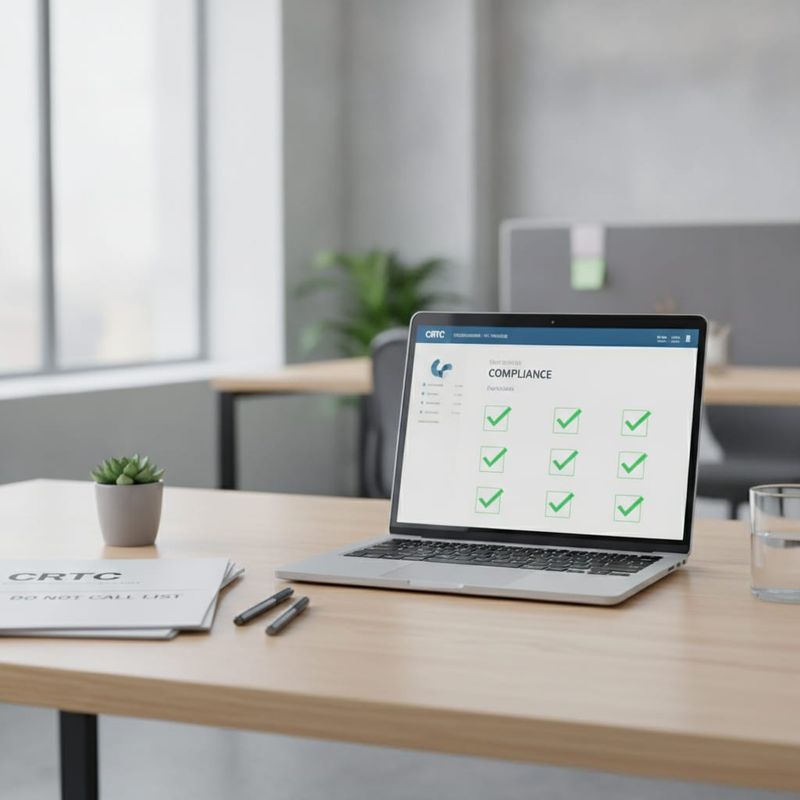
Yes, AI cold calling is legal in Canada. The CRTC's Unsolicited Telecommunications Rules permit automated outbound calls provided your organization has registered with the National DNCL, scrubbed against it within the past 31 days, displays accurate caller ID, and dials only within the permitted calling windows. If the number is on the NDNCL, you need either an existing business relationship (last transaction within 18 months) or the prospect's express consent to call.
The distinction most teams miss: Canada doesn't ban automated dialing for B2B outreach the way the US TCPA restricts automatic telephone dialing systems. Canada's framework focuses on list-based compliance through the NDNCL, calling hours, and caller identification. An AI voice agent calling a Canadian business prospect is legal as long as you've run the compliance steps. The problems that generate CRTC fines are almost always an outdated NDNCL scrub or a timezone misconfiguration that pushes calls past the 9:30 PM weekday cutoff.
Topcalls' AI voice agents run NDNCL and calling-hours checks before every dial. Canadian carriers have also adopted STIR/SHAKEN caller authentication frameworks since 2021. If your calls are flagging as 'spam likely' in Canada, the same attestation principles apply. Our STIR/SHAKEN guide covers how to reach A-level attestation and stop spam flags before they tank your answer rates.
What does CASL require for outbound calls?
CASL doesn't directly regulate voice calls, but it almost certainly applies to part of your AI campaign. If your outreach includes a follow-up SMS after the call, a voicemail transcript delivered to an email address, or any other commercial message sent electronically to promote a product or service, those touchpoints are commercial electronic messages (CEMs) under CASL and require consent. Multi-channel AI calling operations in Canada are running under both frameworks simultaneously, whether the compliance team realizes it or not.
For the electronic touchpoints that fall under CASL, there are two consent types. Express consent means the contact explicitly opted in to receive commercial messages from your company, via a web form, a checkbox, or verbal consent with a recording. Implied consent covers situations where you have an existing business relationship: a purchase or signed contract within the past two years, or a direct inquiry to your company within the past six months. Both need documentation you can produce if the CRTC Compliance and Enforcement group asks.
Express consent is the safer baseline. Implied consent has expiry windows and doesn't carry across channels: a phone contact's implied consent for calls doesn't automatically cover your post-call SMS. Canada's rules on identifying AI callers are worth reviewing alongside the consent framework, since disclosure obligations can affect how you capture consent during the call itself.
How do you scrub the National DNCL?
Scrubbing the NDNCL takes four steps: register your organization with the CRTC's National DNCL service, specify the area codes covering your prospect lists, download the current residential and wireless number files, and remove any matching numbers before dialing. You must re-download and re-scrub at least every 31 days. The NDNCL updates continuously, and an expired scrub doesn't satisfy the CRTC's requirements, even if the numbers you're calling weren't recently added to the list.
Registration gives you access to the NDNCL download service, operated on behalf of the CRTC. Organizations pay a subscription fee based on the area codes they access. Downloads come in plain text format that your calling platform or CRM can compare against your lead list. This applies to any business making telemarketing calls to Canadian numbers, regardless of where the business itself is located. A US-based company running AI calls into Ontario still needs an active NDNCL subscription.
Several categories are exempt from the NDNCL registration requirement:
- Existing business relationship: the person made a purchase or signed a contract within the past 18 months, or made an inquiry within the past 6 months
- Registered charities calling for fundraising purposes
- Political parties, electoral candidates, and leadership candidates calling for election-related purposes
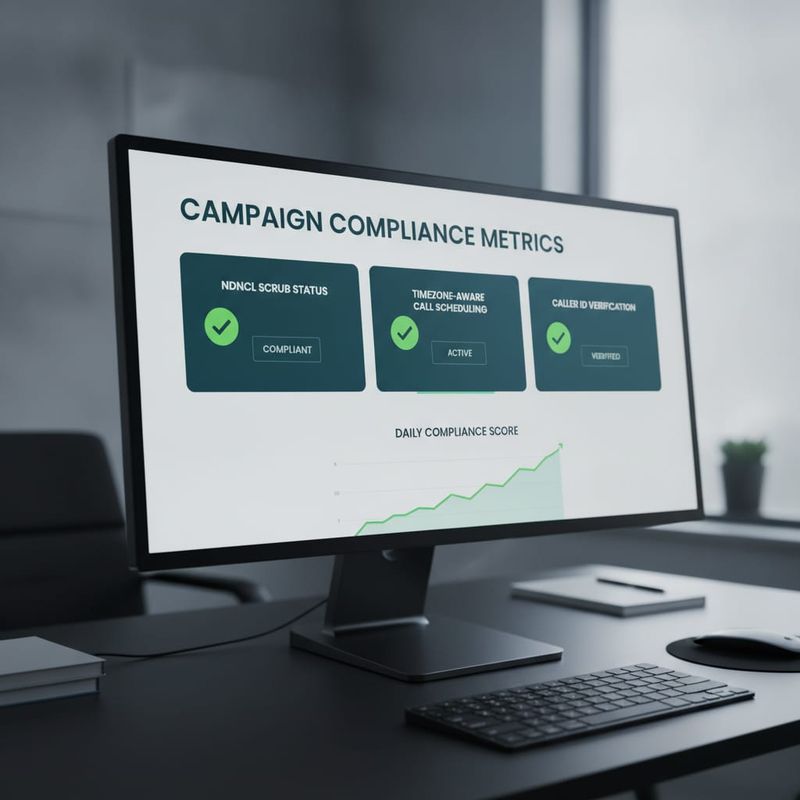
Topcalls handles the NDNCL scrub automatically before each campaign launch. The system checks every number against the current NDNCL export and removes registered numbers not covered by a qualifying exemption. The audit trail records when each scrub ran, which numbers were removed, and the reason, which is exactly what the CRTC asks for during enforcement reviews. If you're running campaigns in both Canada and the US, Topcalls' secure infrastructure covers TCPA and NDNCL compliance in the same platform without maintaining two separate compliance stacks.
What are the CASL penalties for violations?
CASL violations for unsolicited commercial electronic messages carry fines up to CAD $1 million per incident for individuals and CAD $10 million per incident for organizations. Each unsolicited message can constitute a separate violation, so a campaign that sends SMS texts to 1,000 unconsenting recipients could generate 1,000 separate counts. For voice calls, the CRTC issues NDNCL violation notices separately: up to CAD $1,500 per unlawful call to a residential number and CAD $15,000 per call to a business number.
The per-call math at AI calling volumes is worth calculating before a campaign goes live. If an AI campaign dials 5,000 Canadian business numbers using an NDNCL list that's 45 days old, and 200 of those numbers registered on the NDNCL during the gap, that's up to CAD $3 million in potential NDNCL exposure from a single batch. The CRTC publishes enforcement decisions on its telemarketing page, and the highest-dollar cases consistently involve outdated lists and inadequate scrub documentation, not intentional non-compliance.
What calling hours does the CRTC allow?
The CRTC restricts telemarketing calls to 9 AM to 9:30 PM Monday through Friday and 10 AM to 6 PM on Saturdays and Sundays. All windows are measured in the recipient's local time, not the calling platform's timezone. Calls on statutory holidays follow the same restrictions as Sundays. One timezone configuration error on a campaign targeting both Ontario and British Columbia can push hundreds of calls outside the permitted window before the first daily report surfaces the problem.
The 'recipient's local time' requirement gets complicated fast across Canada's six time zones (Pacific through Newfoundland). A campaign set to dial at 8 PM Eastern is calling Vancouver at 5 PM, which is fine. But that same schedule reaches Newfoundland at 9:30 PM Newfoundland Time, right at the CRTC's weekday cutoff. Some provinces also observe daylight saving transition dates on different schedules than US states, so a timezone library that handles US zones accurately can still get Canadian zones wrong during transition weeks.
Topcalls' Smart Campaigns enforce calling hours per contact using the number's geographic timezone. The platform won't dispatch a call outside the CRTC window for that specific contact's location, and it queues deferred contacts for the next permitted window rather than dropping them from the campaign. If a batch of Ontario numbers can't be reached by 9:30 PM ET, they carry into the following morning's 9 AM window automatically.
Running a compliant AI calling campaign in Canada
Canadian compliance for AI calling is a checklist, not a maze. Register with the NDNCL service and set a 31-day re-scrub cadence. Configure calling windows in your dialing platform using recipient timezone, not server timezone. Display an accurate callback number on every call. Maintain a company-specific DNC list and honor removal requests within 28 days. If your campaign includes any SMS or email follow-ups, document consent for those touchpoints separately under CASL. That's the full framework.
If your Canadian campaigns include call recording, consent requirements vary by province along one-party vs all-party consent lines, similar to US state rules. Our US call recording consent guide covers the state-by-state picture; the same 'tell the other party you're recording' principle applies in Canadian provinces with all-party consent requirements.
Topcalls handles the compliance layer for teams calling into Canada: NDNCL scrubbing before each launch, timezone-aware scheduling per contact, accurate caller ID enforcement, and DNC request logging with timestamps. Topcalls processes 63,000+ AI calls daily across North America and handles Canadian NDNCL scrubbing as part of every campaign setup. If you want to model the ROI of a compliant Canadian campaign, run your numbers through the calculator. Or book a strategy call and we'll walk through your specific list and workflow.
Frequently Asked Questions
Get AI calling tips in your inbox
No spam. One email per week with actionable sales automation tips.