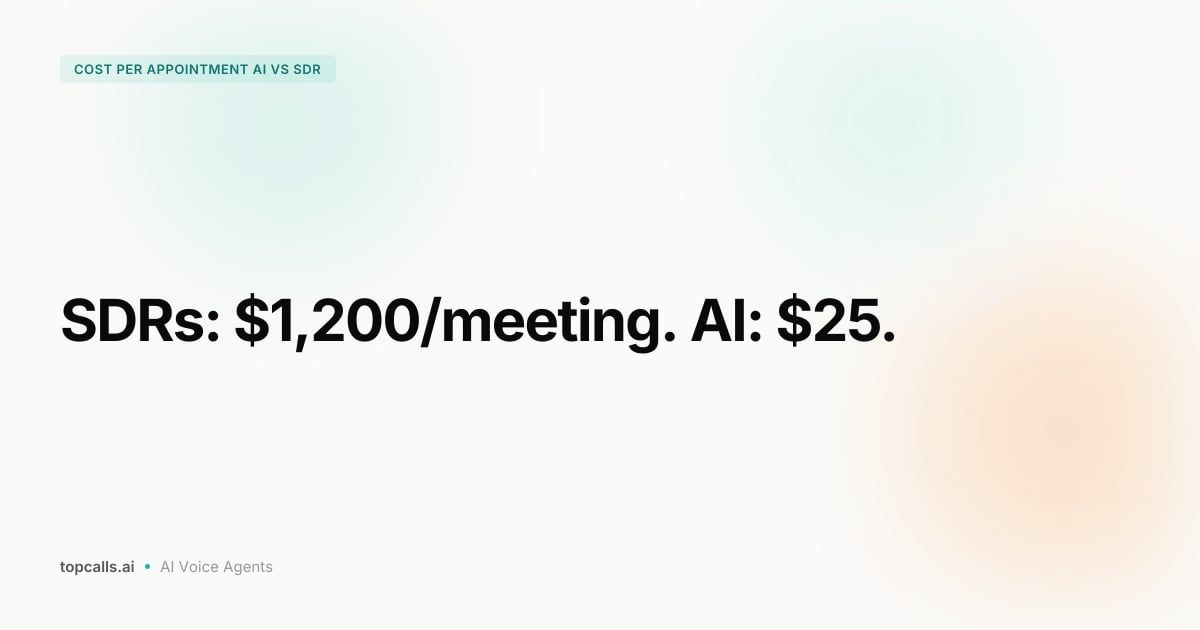
Your SDR makes 50 calls a day. On a good day, they book two meetings. Run the math on a fully loaded $130,000 salary and that's over $1,200 per booked appointment. AI calling teams are hitting the same pipelines for $15 to $50. This is the full cost per appointment breakdown, with real numbers on both sides.
Key Takeaways
- Human SDRs fully loaded at $130,000-$140,000/year book 8-10 qualified meetings per month, putting cost per appointment above $1,000.
- AI calling at $0.35/min all-inclusive generates appointments for $15-$150, depending on conversion rate and average talk time per lead dialed.
- The cost gap runs 85-95% in AI's favor for high-volume outbound, with a payback period of 2-6 weeks for most teams running 200+ leads per week.
- SDRs take 3-4 months to ramp to full productivity. AI campaigns go live in 15 minutes with no onboarding cost and no churn risk.
- The right model for most teams isn't SDR vs AI. It's SDRs focused on enterprise accounts plus AI running the high-volume prospecting they can't reach.
1. What Does an Appointment Cost With a Human SDR?
A fully loaded SDR in the US costs $130,000-$140,000 per year when you factor in base salary, variable comp, benefits, software, and management overhead. At 8-10 qualified meetings booked per month, that puts cost per appointment between $1,083 and $1,458. And that's before the 3-4 month ramp period where you're paying full salary for roughly half the output.
The math isn't complicated, just uncomfortable. SDR base salaries run $50,000-$60,000 in the US, with OTE landing around $70,000-$90,000 per Glassdoor compensation data. But the real number is the fully loaded cost: benefits add roughly 30% to base salary, software tools like Salesforce and LinkedIn Sales Navigator add $5,000-$12,000 per seat annually, and there's a share of management overhead. SalesHive's analysis of true SDR cost puts the all-in number at $130,000-$140,000 per year for a typical US hire.
On the output side, benchmarks from a survey of 939 companies found the median SDR books 8-10 qualified meetings per month. Top performers hit 12-15. So: $130,000 divided by 12 months divided by 9 meetings equals $1,204 per appointment. That's your baseline before anything goes wrong.
Then there's ramp. SDR ramp time averages 3-4 months before you see full productivity. During that window you're paying full salary and benefits for 30-50% of quota. Add $30,000-$40,000 to year-one cost per appointment before anyone's really in stride.

Churn makes it worse. Annual SDR turnover runs above 30% in most B2B sales environments, which means you're restarting that ramp cycle roughly every 2-3 years per seat. Cost per appointment isn't a fixed number. It's a recurring drag.
2. What Does an AI-Booked Appointment Cost?
AI calling at $0.35/min all-inclusive costs between $15 and $150 per booked appointment depending on your conversion rate and average talk time per lead dialed. At a 5% conversion rate with call interactions averaging 3-4 minutes per lead contacted, a booked appointment costs about $25. At 10% conversion it drops under $15.
Here's the formula using Topcalls pricing:
Cost per appointment = (leads dialed × avg minutes per lead × $/min) ÷ appointments booked
At 5% conversion and 3.5 minutes average talk time per lead dialed: 20 leads × 3.5 min × $0.35 = $24.50 per appointment. At 8% conversion, it's about $15. At 2% conversion on very cold lists, it climbs to around $61. Your actual number lives somewhere in that range based on list quality and offer.
What changes the math entirely is volume. A human SDR can work 50-80 contacts a day with breaks, prep time, and CRM updates. Topcalls processes 63,000+ calls daily across the platform. An AI campaign running overnight on 500 leads can book 25-40 meetings while your team is off the clock. AI voice agents for sales run 24/7 without burnout, quota anxiety, or bad days.
Sub-500ms voice latency means the AI doesn't sound mechanical in the pause after a prospect speaks. Every call starts at peak focus with the same delivery. There's no post-lunch slump, no commission anxiety shifting the pitch.
3. How Much Cheaper Is AI Per Appointment?
AI calling is 85-95% cheaper per appointment than a human SDR for most outbound teams. At $1,200 average cost per SDR-booked meeting versus $15-$150 for AI-booked meetings, the cost ratio runs between 8:1 and 80:1 in AI's favor, depending on your conversion rate and list quality.
The advantage compounds at scale. An SDR team to book 100 meetings per month needs 10-12 reps at $1.3M+ in annual cost. The same 100 AI-booked meetings via Topcalls runs roughly $1,500-$15,000 per month in calling fees, depending on conversion rate and list quality.
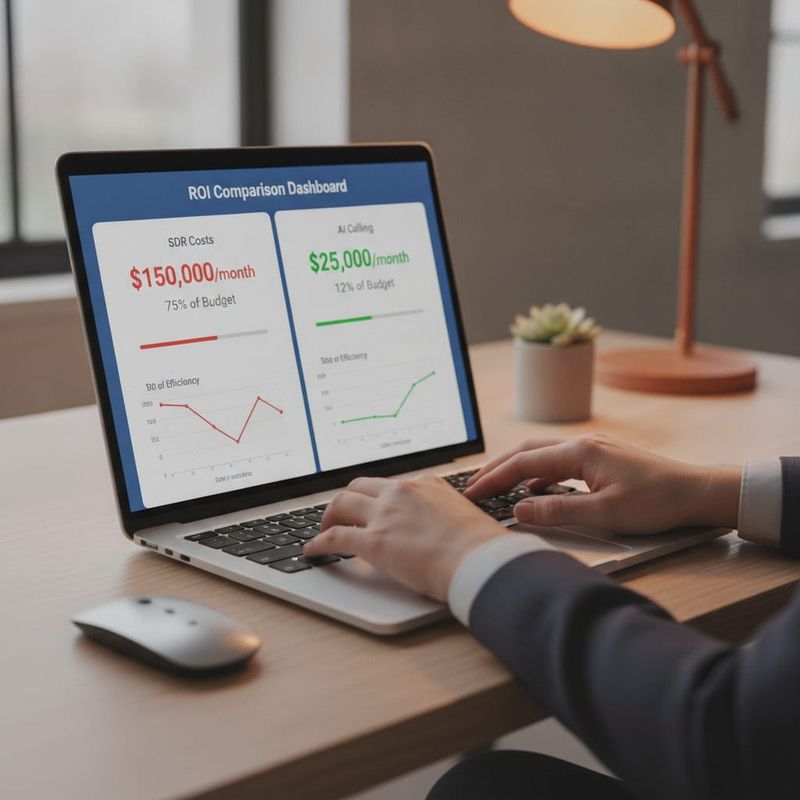
Want to see the numbers for your team? Plug in your SDR headcount, fully loaded cost, and monthly meetings into the AI calling ROI calculator to see your cost per appointment comparison in 60 seconds.
4. What's the Payback Period on AI Calling?
For teams running 200+ leads per week, payback on AI calling typically hits in 2-6 weeks. If AI saves you $1,000 per appointment versus an SDR and you book 10 incremental meetings in month one, you've covered more than a full year of AI calling costs inside the first 30 days.
Two scenarios that show how this plays out:
Scenario A: Replace one SDR. One SDR books 9 meetings/month at $1,204 each fully loaded. Replace that output with AI calling at $0.35/min: 9 meetings at roughly $30 average per booked meeting = $270/month in call costs. Annual savings versus keeping the SDR: $130,000 minus $3,240 in AI fees = $126,760. Payback is before the end of month one. AI-powered follow-up automation compounds these savings across every sequence you run.
Scenario B: Augment the existing team. Keep your SDRs, use AI for the volume they can't reach. Instead of hiring an additional SDR at $130K, add AI calling for $270-$500/month to generate the same incremental meetings. You get the additional pipeline without headcount, ramp time, or churn risk. When prospects warm up, your human SDRs close them.
Either way, the payback question isn't really "does AI pay back." It's "how fast does AI pay back" and for most teams with consistent lead volume, the answer is under 90 days. Run the specific numbers for your headcount with the appointment ROI calculator.
5. How Do You Calculate Cost Per Booked Meeting?
Cost per booked meeting equals your total outreach cost divided by meetings confirmed (not just scheduled, confirmed and held). For SDRs, that total includes base salary, variable comp, tools, and overhead. For AI calling, it's the per-minute calling fee alone. Measuring both the same way is what makes the comparison honest.
The formulas:
- SDR: (annual fully loaded cost ÷ 12 months) ÷ confirmed meetings held per month
- AI calling: (leads dialed × avg call minutes per lead × per-minute rate) ÷ confirmed meetings held
Three traps that make your cost-per-meeting number wrong:
- Scheduled vs. confirmed. A meeting that gets ghosted before it happens isn't a booked meeting. Track show rate separately or your cost-per-appointment metric is lying.
- Qualified vs. total. SDRs booking unqualified leads to hit quota will make your cost-per-appointment look better and your cost-per-closed-deal look terrible. Always pair the metric with a qualification standard.
- Ignoring retry value. Topcalls includes smart retry logic: unanswered calls retry in hours, busy signals retry in minutes. That improves effective conversion without raising calling fees, dropping AI cost per appointment further as retry cadence kicks in.

Track both SDR and AI numbers in the same spreadsheet for one quarter. Most teams find the AI number is better than expected and the SDR number is worse. See how AI appointment setting fits into a typical outbound workflow.
When AI Appointment Setting Doesn't Fit
The cost comparison favors AI by a wide margin, but the use case isn't universal.
Where AI calling underperforms: large enterprise accounts where the first call needs to reference a specific procurement timeline, a named mutual connection, or board-level context the AI can't know without deep account research. At $500K+ deal sizes, experienced buyers notice the difference between a researched human call and a scripted pitch. That gap matters in complex sales.
Where it works best: mid-market and SMB outbound where the appointment ask is clear, re-engagement of cold or lapsed leads, follow-up sequences after webinars or trade shows, geographic expansion where local SDR hiring isn't feasible, and speed-to-lead for inbound inquiries in the critical first 5 minutes. That last use case alone can shift your cost per appointment significantly if you're currently leaking warm leads to slow response time.
Most teams that use AI well aren't running it instead of their best SDRs. They're using it for the top-of-funnel volume their SDRs don't have time to reach, then routing warmed prospects to human closers. That hybrid model captures most of the AI cost advantage while keeping human judgment in the conversations where it earns its pay.
A $1,200 cost per appointment from an SDR versus $15-$150 from AI isn't a marginal difference. It's a different category of economics for outbound sales. If you want to see what that math looks like for your specific headcount and lead volume, start with the ROI calculator. Ready to run a real campaign? Book a strategy call and we'll map the numbers to your pipeline.
Frequently Asked Questions
Get AI calling tips in your inbox
No spam. One email per week with actionable sales automation tips.