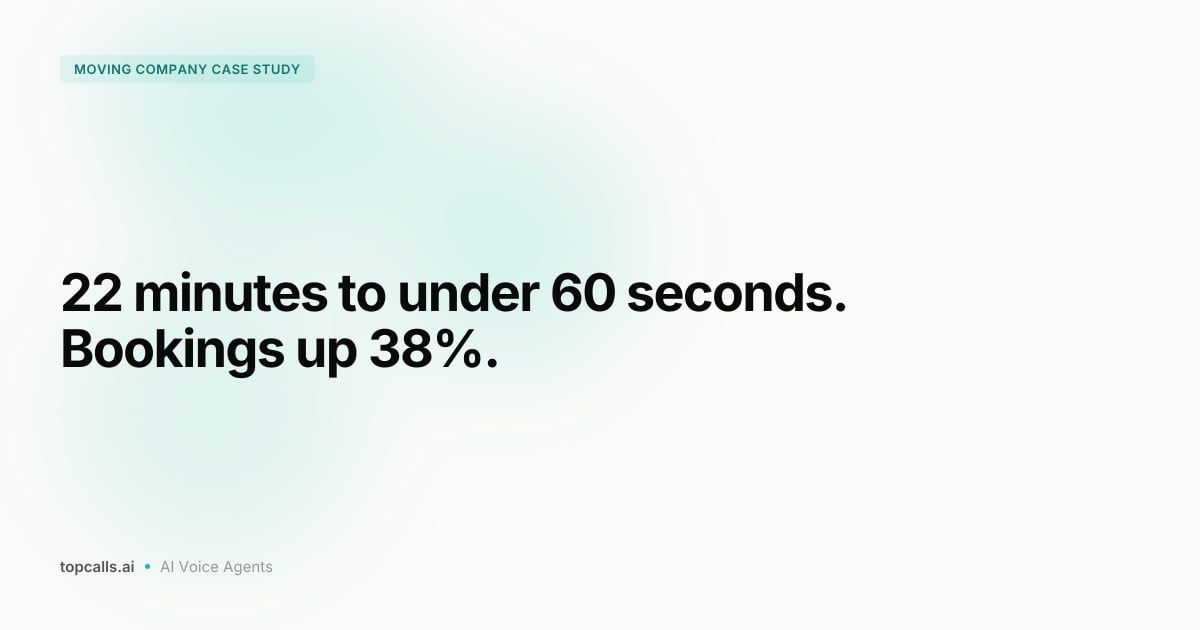
A moving lead is worth roughly $1,200 and goes cold in minutes. Whoever calls back first usually wins the job. This moving company AI case study follows a regional mover that was answering web leads in an average of 22 minutes and losing most of them to faster competitors. After deploying a Topcalls AI voice agent, first-response time dropped to under 60 seconds and booked estimates climbed 38% in eight weeks.
The mover runs three branches across the Southeast and books about 90 residential moves a month. Names and exact figures are anonymized at the company's request, but the before-and-after numbers below are the real shape of the engagement. Here's what was broken, what got deployed, and what changed.
Key Takeaways
- First-response time on new web leads fell from a 22-minute average to under 60 seconds after the Topcalls AI agent went live.
- Booked in-home and virtual estimates rose 38% over eight weeks, from about 71 a month to 98.
- After-hours capture added 19 booked estimates a month that used to roll to voicemail and disappear by morning.
- The mover's first-responder win rate climbed from roughly 1 in 4 leads to nearly 1 in 2 once the AI answered every lead inside a minute.
- The campaign ran at $0.35 per minute all-inclusive on Topcalls, about $640 a month, against an SDR cost near $4,500 for the same coverage.
- The agent went live 13 days after kickoff, with sub-500ms response latency on every call.
Why Was the Moving Company Losing Leads?
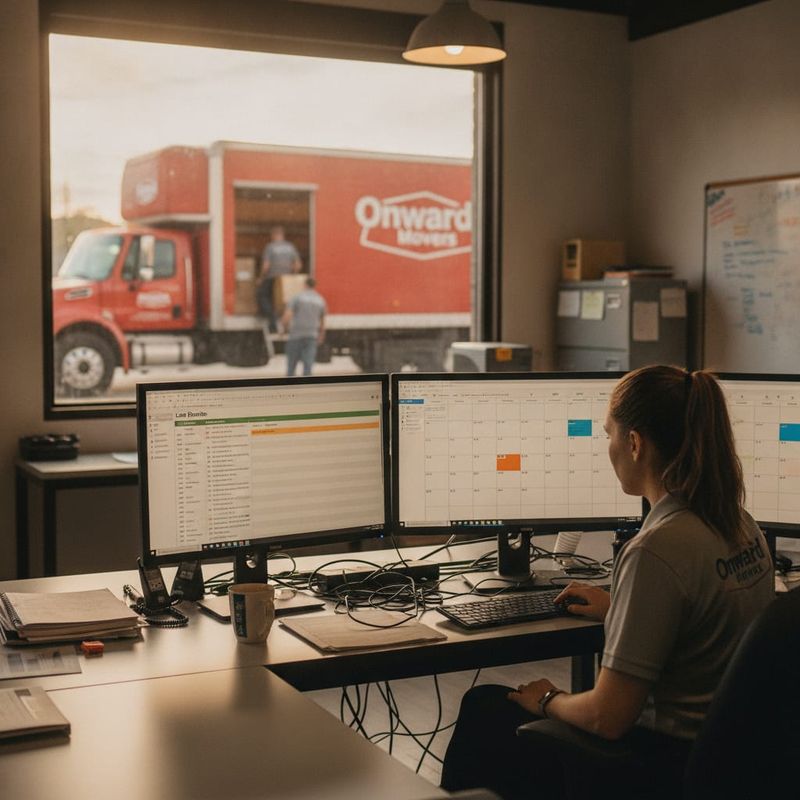
The moving company was losing leads to slow callbacks. Web-form inquiries sat in an inbox for an average of 22 minutes before anyone dialed back, and by then the prospect had often booked an estimate with a competitor who called first. With a four-person office juggling dispatch, customer calls, and quotes, nights and weekends went straight to voicemail.
Speed is the whole game in moving. The classic Lead Response Management study found that contacting a web lead within 5 minutes makes you 21 times more likely to qualify it than waiting 30 minutes, and the odds keep falling every minute after that. A 22-minute average put this mover deep in the dead zone for most of its leads.
The pattern showed up in the numbers. Of the roughly 280 web and phone leads the mover got each month, only about 1 in 4 turned into a booked estimate. Most movers shop three or four companies, so a lead that reaches a real conversation in 30 seconds beats one that gets a callback after lunch.
After-hours was the quiet bleed. Roughly a third of the mover's form fills landed between 6 PM and 8 AM, when no one was at the desk. Those went to a voicemail greeting, and a customer comparing four movers rarely waits for a callback the next morning. The company had no way to count exactly how many it lost, which made the leak easy to ignore.
Curious what slow callbacks cost your own shop? Plug your lead volume and close rate into the Topcalls ROI calculator to see the revenue sitting in missed and late callbacks.
How Did AI Cut Response Time Below 60 Seconds?
The mover wired its web form and call tracking straight into a Topcalls AI voice agent that dials a new lead the second it lands. The agent answers in under 60 seconds, day or night, confirms the move date and origin and destination, and books an in-home or virtual estimate on the company calendar. Sub-500ms response latency keeps the back-and-forth feeling like a real conversation.
The trigger is the lead itself. When a form fill or a missed call hits the system, Topcalls fires an outbound call within seconds instead of dropping a task in someone's queue. The mover set the agent to try the lead three times in the first ten minutes if the first call went unanswered, then back off to its smart retry schedule.
The script stayed short on purpose. The agent qualifies four things: move date, home size, origin and destination ZIPs, and whether the customer wants an in-home or virtual estimate. That's enough to book a slot and route the job to the right branch. Anything outside that, like a piano move or a long-haul interstate quote, gets flagged and handed to a human estimator.
Booking happens on the call. The Topcalls appointment-setting workflow reads live calendar availability per branch, locks the estimate slot while the customer is still on the phone, and sends a text confirmation plus a reminder the morning of. No double-booking, no callback tag, no lead sitting in an inbox.
Setup took 13 days from kickoff to first live call. Most of that was mapping the three branch calendars, writing the qualification logic, and scrubbing the calling list for compliance. The office crew kept doing what it did before; the AI just stopped letting leads sit.

How Many More Estimates Got Booked?
Booked estimates rose 38% over the first eight weeks, from about 71 a month to 98. The lift came almost entirely from catching leads the office used to miss: instant callbacks during the day and full coverage at night. With the AI answering every lead in under a minute, the mover's first-responder win rate roughly doubled, from 1 in 4 leads to nearly 1 in 2.
Here's the before-and-after, branch totals combined. The estimate-to-booked-job conversion held steady at about 41%, so more estimates flowed straight through to more revenue.
The mover watched all of this in the Topcalls real-time analytics dashboard, which is the first time the company could see response time and booking rate per branch in one place. The dispatch manager put it plainly: "We weren't slow because we were lazy. We were slow because four people can't answer the phone and run three branches at once. The agent just never misses."
Want the full playbook behind this setup? Read our guide on AI voice agents for moving companies for the scripts, integrations, and quote-follow-up flows that drive these numbers.
What Did After-Hours Capture Add?
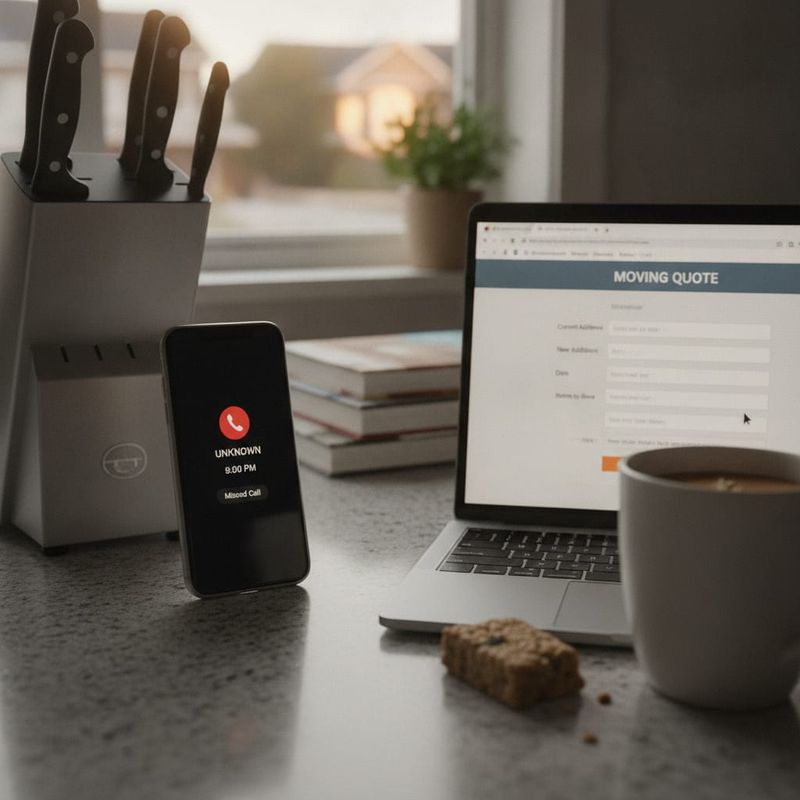
After-hours capture added 19 booked estimates a month that used to vanish into voicemail. About a third of the mover's leads came in between 6 PM and 8 AM, and before the AI those went unanswered until the next business day. Now the agent answers them in under a minute, around the clock, and books the estimate while the customer is still deciding which mover to call.
Evenings are when people plan moves. Someone gets home, fills out three quote forms over dinner, and books with whoever calls back that night. A voicemail greeting loses that customer by morning. The AI agent turned the mover's quietest hours into 19 extra booked jobs a month, worth real revenue at roughly $1,200 a move.
Weekends followed the same pattern. Saturday and Sunday inquiries that used to wait for Monday now got answered on the spot. Topcalls runs 24/7 with a 99.9% uptime SLA, so the mover never has to staff a night shift or pay overtime to cover the leak. The cost stayed flat at $0.35 per minute whether the agent called at 2 PM or 2 AM.
There's a margin point hiding here. Each of those 19 jobs cost almost nothing to capture, because the lead was already paid for and the agent runs at per-minute pricing. The mover wasn't buying more leads. It was finally closing the ones it had already bought and been throwing away every night.
What's the Lesson for Service Businesses?
The lesson is that speed beats almost everything else for service businesses that compete on the callback. This mover didn't change its prices, its trucks, or its crews. It just answered every lead in under 60 seconds instead of 22 minutes, and bookings jumped 38%. If your customers shop three or four providers, the one who reaches them first usually wins.
The same setup works for any business where leads come in hot and go cold fast: HVAC, roofing, junk removal, pest control, home services. The math is identical. A lead you paid for is worth far more when it reaches a real conversation in seconds, and an AI agent is the only thing that answers every lead, every hour, at a flat per-minute cost.
Where it doesn't fit: complex specialty moves. Interstate jobs with insurance and inventory questions, fragile-antique handling, or commercial relocations still need a human estimator who can read a situation and price the nuance. The mover kept those on its own team. The AI handled the high-volume residential booking that was bleeding out, and routed the hard ones to a person.
If your office is losing jobs to the company that calls back first, that's a fixable problem. Book a strategy call with Topcalls and we'll map what answering every lead in under a minute would do to your booked-job count.
Get AI calling tips in your inbox
No spam. One email per week with actionable sales automation tips.