Your best SDR makes 80 calls a day. An AI system makes 1,000. But raw volume is a vanity metric, cost per lead is what actually decides whether the switch is worth it. And that number tells a story most sales managers haven't done the math on.
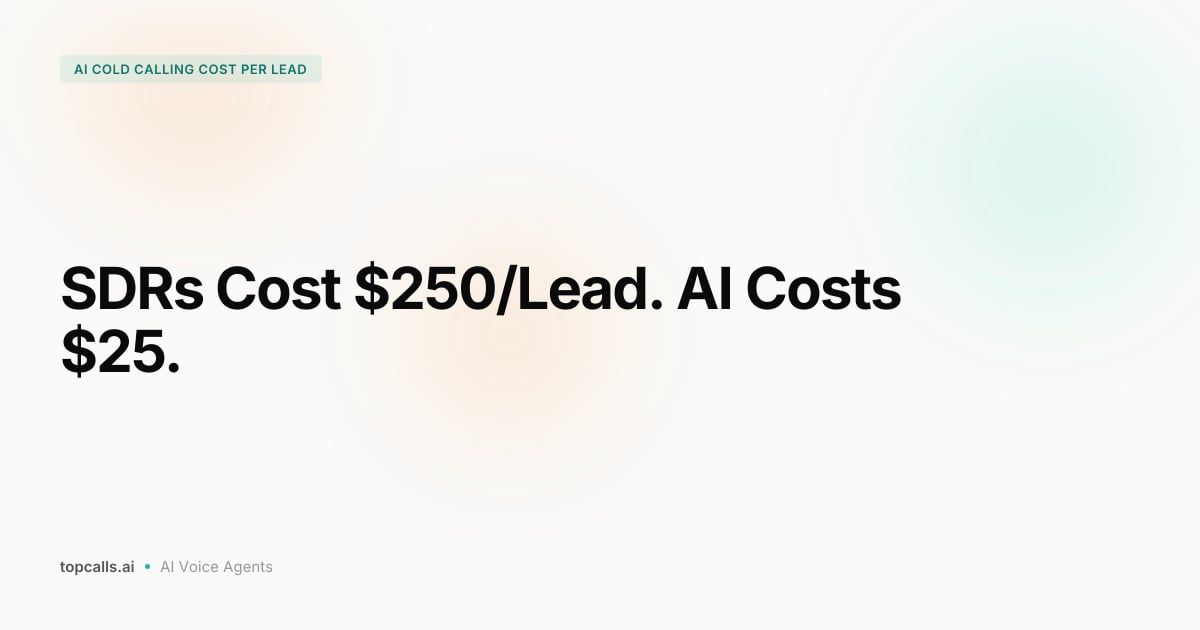
AI cold calling cost per lead in 2026 runs $15–$45 fully loaded for a typical B2B outbound campaign. A human SDR generating the same qualified leads costs $200–$500 each, once you divide total compensation by actual output. Smart Campaigns from Topcalls run those at scale. This breakdown shows where the gap comes from, how to calculate it for your own pipeline, and which variables move the number in either direction.
Key Takeaways
- AI cold calling costs $15–$45 per qualified lead all-in, vs $200–$500 for a human SDR on fully-loaded compensation, a 5–10x gap that compounds as volume scales.
- Topcalls processes 63,000+ AI calls daily at $0.35/minute all-inclusive, making per-lead cost predictable from campaign day one.
- Connect rate is the single biggest CPL driver. Topcalls customers average a 60%+ lift in answer rates, which cuts cost per lead roughly in half at the same call volume.
- A fully-loaded US SDR, salary, bonus, benefits, training, and tools, runs $70,000–$95,000 per year. At 120–200 qualified leads annually, that's $350–$800 per qualified lead.
- A 1,000-call campaign with a 10% connect rate and 3-minute average calls costs $105 in Topcalls fees. CPL from there depends on your qualification rate from those 100 conversations.
1. What Does AI Cold Calling Cost Per Lead?
AI cold calling costs $5–$15 per qualified lead in direct call fees, and $15–$45 when you include list procurement and operational overhead. At Topcalls' $0.35/minute rate, a 3-minute average conversation costs $1.05. A 1,000-number campaign at a 10% connect rate produces 100 conversations and runs $105 in call fees. Divide that by your qualified leads and you have your CPL.
The math gets cleaner once you fix the terminology. Most teams conflate 'leads called' with 'qualified leads generated.' AI calling charges per minute of actual conversation, not per dial, dead numbers, voicemails, and disconnects don't inflate your cost. What drives CPL up is low connect rates and loose qualification criteria.
A real example: 500 leads, 12% connect rate = 60 conversations. Average call: 3 minutes. Total billed: 180 min × $0.35 = $63. Qualification rate from conversation: 20% = 12 qualified leads. Call-cost CPL: $5.25. Add a $0.25/contact list purchase ($125) and your fully-loaded CPL is about $15.67. That's not an accounting trick, it's a structural cost advantage.
2. How Does AI CPL Compare to Human SDR CPL?
A human SDR costs $200–$500 per qualified lead when you divide fully-loaded annual compensation by actual output. At $70,000–$95,000 per year in total comp and 120–200 qualified leads annually, consistent with SDR productivity benchmarks from The Bridge Group and similar sales development research firms, that's $350–$790 per qualified lead. AI cold calling generates the same category of qualified lead at $15–$45.

This comparison is real, but it needs context. Human SDRs excel at complex, consultative conversations, multi-stakeholder enterprise deals where relationship depth matters more than volume. AI calling is most cost-effective at top-of-funnel qualification: BANT-style screening, appointment setting, and reactivation campaigns where the questions are structured and the goal is separating interested buyers from everyone else. That's where the 10x CPL gap is most pronounced.
3. What Drives Cost Per Lead Up or Down?
Three variables move AI cold calling CPL more than anything else: connect rate, average call length, and qualification rate. These compound against each other. A 5% connect rate with a 10% qualification rate produces a CPL roughly 4x higher than a 12% connect rate with a 25% qualification rate, even at identical call volume and the same $0.35/minute spend.
- Connect rate. The percentage of dials that reach a real person who speaks with the agent. Industry cold-outbound baseline sits at 4–8%. Topcalls customers average a 60%+ lift through time-of-day optimization, local presence dialing, and number rotation. Double your connect rate and you halve your CPL, everything else equal.
- Average call length. At $0.35/minute, every extra minute per conversation adds $0.35 to your per-lead cost. A 5-minute qualification call costs $1.75; a 2-minute one costs $0.70. Front-load qualifying questions, budget, timeline, role, to cut call length without losing lead quality.
- Qualification rate. What percentage of conversations produce a lead you'd pass to sales? A loose ICP definition pushes this to 5–10%, tripling your CPL. A tight, specific ICP with clear criteria pushes it toward 20–30%. This lever has nothing to do with the AI, it's entirely in the list and the qualification framework.
The hidden variable most teams overlook is list quality. Calling 500 true-ICP prospects beats calling 2,000 generic contacts every time, because both connect rate and qualification rate climb when the names on the list should actually be there. For more on volume and sequence strategy, see our sales acceleration guide.
4. How Do You Calculate CPL for an AI Campaign?
Divide total call spend by qualified leads generated. The formula: CPL = (total conversation minutes × per-minute rate) ÷ qualified leads. You can project it before spending a dollar. Estimate your connect rate, average call length, and qualification rate from conversation, plug them in, and you'll have a range that holds up to any finance review.
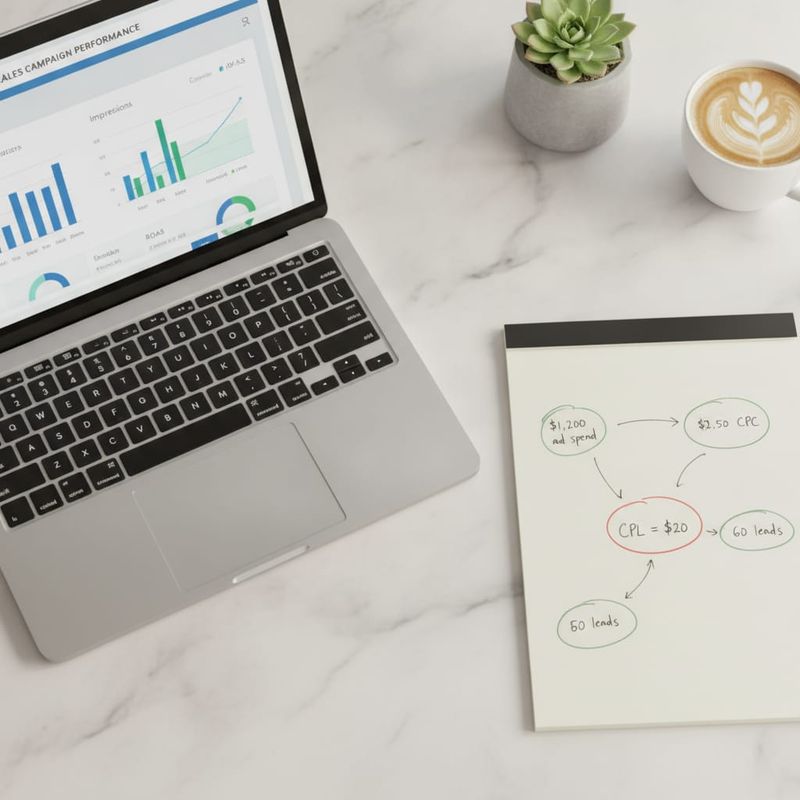
Walk through a real example. You're calling 1,000 leads. Connect rate: 10% = 100 conversations. Average call: 3 minutes. Total minutes billed: 300. Total call cost: 300 × $0.35 = $105. Qualification rate from conversation: 20% = 20 qualified leads. CPL: $105 ÷ 20 = $5.25 in direct call fees.
Add list procurement, $0.10–$0.40/contact for a quality B2B list, and the fully-loaded CPL runs $10–$25 for this example. That's your real number: call fees plus the cost of the names you're calling. Topcalls' fixed $0.35/minute rate means there are no surprise add-ons to recalculate mid-campaign.
Want to run this math with your team's actual numbers? The Topcalls ROI calculator does it in 60 seconds, calls per day, connect rate, deal size, and close rate all factored in.
5. What's a Good Cost Per Qualified Lead in 2026?
A solid AI cold calling CPL target is $25–$75 for a qualified B2B lead, though this shifts by deal size. For SMB deals under $10,000 ACV, anything under $50 is strong. For mid-market and enterprise, the acceptable threshold climbs, a $75 lead that closes a $50,000 deal is a bargain; a $10 lead that closes a $2,000 deal is not. HubSpot's annual marketing benchmarks put average B2B CPL across all channels above $200. AI cold calling consistently sits well below that floor.

These ranges assume a consistent lead definition: a conversation with a real decision-maker who meets ICP criteria and has a clear next step. A looser definition, any connected call that didn't immediately decline, can push CPL below $10. That number looks great on a dashboard and generates zero pipeline. Tighten the definition first. Our AI lead qualification guide covers the framework for getting that right.
6. Where AI Cold Calling Won't Cut Your CPL
AI cold calling doesn't deliver $15–$45 CPL in every scenario. Three situations consistently push cost per lead above what a human SDR would charge, and forcing the technology into them makes results worse, not just more expensive.
- Enterprise multi-stakeholder deals. When a sale requires navigating a 5-person buying committee and the first call is really about mapping the org, AI loses signal. Human SDRs listen for organizational context, who actually influences the decision, what the internal politics are. An AI agent follows the qualification script.
- Deals with 9+ month cycles and deep discovery. If your qualification conversation needs to flex significantly based on what you hear in the first 60 seconds, AI works better as a handoff accelerator than a primary qualifier. Use it to get the human on the calendar faster, not to replace the human entirely.
- Poor list quality with wide ICP targeting. If your outreach list has 40%+ bad numbers and broad audience targeting, AI calling generates short conversations with the wrong people. Per-call costs stay low, but CPL climbs because you're not generating qualified leads from those conversations.
The teams hitting $15–$45 CPL consistently use AI calling for high-volume top-of-funnel qualification, structured questions, clear ICP, and a list that was actually sourced. If that's the bottleneck, book a strategy call to see what the math looks like for your pipeline specifically.
Frequently Asked Questions
Get AI calling tips in your inbox
No spam. One email per week with actionable sales automation tips.