66% of car dealership leads never get a response in the first 24 hours. The ones who do usually wait 3 to 6 hours. By that point, the buyer has already called two other lots.
AI calling for automotive dealerships changes that math entirely. Instead of waiting for a rep to get off the floor, AI voice agents call back every new lead in under 60 seconds, qualify by budget and timeline, and book test drives directly into your calendar. No hold times. No voicemails. No leads going cold because your sales floor was busy.
This guide covers how it works, what to expect from the first 30 days, where AI calling genuinely doesn't fit, and how to get started without a developer or a lengthy IT project.
1. Why the 5-Minute Window Makes or Breaks the Sale
The car buying journey starts online. A prospect fills out a form on AutoTrader, Cars.com, or your dealership website at 8 PM on a Tuesday. That's peak intent. They want to talk to someone now, not tomorrow morning.
Responding within 5 minutes makes you 100 times more likely to reach that lead than waiting 30 minutes. Wait an hour and you're competing against dealers who already took the deposit. Responding within 1 minute delivers a 391% increase in conversion likelihood compared to calling after 60 minutes.
27% of automotive leads never get contacted at all. It's not because teams don't want to call. It's because salespeople are on the floor, handling test drives, or off shift. The lead sits in a CRM queue until morning, already cold.
The economics are blunt. A dealership processing 200 inbound leads per month, at a 3% close rate and $2,500 average gross profit per vehicle, leaves roughly $200,000 on the table if they're only reaching 60% of their leads. Run the numbers for your dealership with the ROI calculator to see what a speed-to-lead improvement is worth for your specific volume.
Three things shift when you close the response gap:
- Lead reach rate: Dealers calling within 1 minute see 391% higher conversion versus those calling after an hour. Speed is the variable most dealerships can control the fastest.
- Competitive position: Most shoppers contact 3 to 5 dealers during their search. The first one to call back almost always gets the appointment.

- After-hours coverage: 35 to 40% of online form fills happen outside business hours. Those leads expire fastest if nobody calls that night.
2. What AI Calling Actually Does at a Dealership
An AI voice agent isn't a phone tree. It's a conversational system that talks to your leads the way a skilled BDC rep would. Sub-500ms response latency means there's no awkward pause between sentences. It sounds like a person.
Here's the basic flow when a new lead comes in:
- Lead submits a form: AI triggers within seconds of submission from AutoTrader, Cars.com, your website, or any third-party source feeding your CRM
- Outbound call placed: Agent introduces itself, references the specific vehicle the buyer inquired about, and opens with a direct question
- Qualification: Captures budget, trade-in status, financing interest, and purchase timeline in a natural back-and-forth conversation
- Appointment booking: Connects directly to your scheduling system, books the test drive, sends an SMS confirmation, and adds the event to your calendar
- CRM update: Call outcome, qualification answers, and appointment details are logged before the call ends. No manual data entry required.
The agent works 24/7. A 9 PM lead on Sunday gets a callback at 9:01 PM on Sunday. That's what AI voice agents do for dealerships that can't staff a BDC around the clock. No overtime. No weekend premiums. No missed leads because a rep was on break.
TopCalls processes 63,000 AI calls daily across its customer base. The system handles the volume that kills human teams: every lead, every retry, every follow-up, without anyone burning out.
3. AI Lead Qualification: Sorting Buyers from Browsers
Not every lead who fills out a form is ready to buy. Some are just checking prices against their current lease. Others submitted three forms at three different dealers to compare inventory. Sending your sales team after every single inquiry wastes hours they could spend with serious buyers.
AI handles the initial filtering by asking the same questions a good BDC rep would in a first call:
- Budget range: "Are you looking at financing options, or are you planning to pay cash?"
- Purchase timeline: "Are you hoping to drive away this week, or are you thinking more like next month?"
- Trade-in: "Do you have a vehicle to trade in? I can start pulling values for you."
- Flexibility: "Were you open to similar models if the exact trim isn't available, or is this specific configuration what you need?"

Answers get logged as structured data in your CRM. When the call ends, your rep gets a notification: qualified buyer, $35k budget, wants a white SUV, available Saturday morning. That's a warm handoff, not a cold call.
Dealers using conversational AI lead qualification report 30 to 37% improvement in lead-to-appointment conversion rates. The gain comes from speed and from consistent follow-through. AI doesn't cherry-pick which leads to pursue based on how a rep is feeling that day.
4. How AI Handles Follow-Up After the First Call
80% of vehicle sales require more than one contact. A buyer says 'I need to think about it.' That's not a no. It's a request for follow-up at the right time, and most dealerships don't have the bandwidth to do it consistently.
AI handles the entire follow-up automation sequence. First call goes to voicemail? AI retries in a few hours. Prospect answered but wasn't ready to book? AI schedules a callback for the timeline they mentioned. No manual tracking, no leads falling through the cracks between shifts.
The retry logic is specific: a busy signal triggers a retry in minutes, an unanswered call retries in hours, a failed connection routes back within an hour. Your team never has to manually track who still needs a follow-up call.
For a deeper look at how multi-touch AI sequences work, this guide on automated follow-up calls covers the full mechanics, including when to escalate from AI to a human rep.
5. Setting Up AI Calling at Your Dealership
Setup is faster than most dealers expect. Standard deployment runs about 15 minutes for the core configuration. Full campaigns go live in 2 weeks from the initial strategy call.
The onboarding runs in two phases:
- Week 1: Discovery call to map your lead sources, sales process, and CRM. TopCalls team configures the voice model, writes the qualification script for your inventory types, and runs test calls before anything goes live
- Week 2: CRM integration, live test campaign with real leads, calibration of qualification criteria based on early results, full campaign launch
Native CRM and calendar integrations cover HubSpot, Salesforce, Pipedrive, and Close. If your DMS isn't on that list, the Zapier connection covers 5,000+ apps. Appointment confirmations flow into Google Calendar, Cal.com, or Calendly automatically.
Pricing is $0.35 per minute, all-inclusive. SIP trunking, AI processing, voice synthesis, and CRM sync are all included. No platform fees stacked on top, no separate telephony costs. A dealership running 500 AI calls per month at 2 minutes average pays $350 in total AI calling costs. Use the ROI calculator to model what that looks like against your current BDC labor costs.
6. TCPA Compliance for Automotive AI Calls
Automotive dealers get TCPA questions constantly, and rightly so. The fines are real. AI calling sits squarely in the regulated zone, and the FCC's guidance from 2024 tightened the rules around AI-generated voice calls specifically.
The short version: you need written or verbal consent before placing AI calls to consumers. Website form submissions with clear disclosure language ("By submitting this form, you agree to receive calls including AI-generated calls from...") cover most inbound leads. Purchased lists are a different situation and need proper opt-in documentation before you dial.
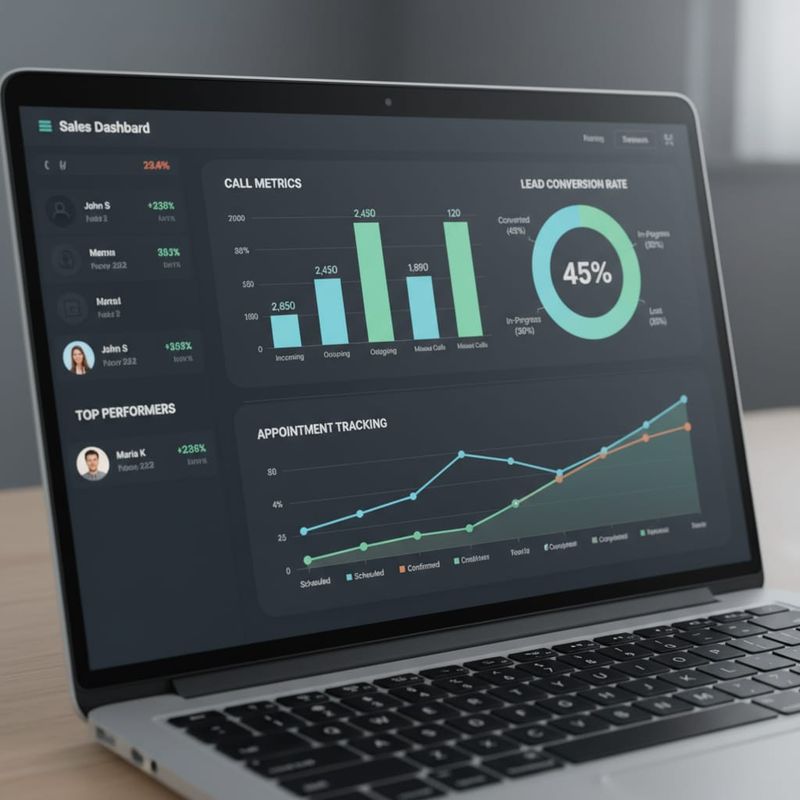
TopCalls builds TCPA compliance tools directly into the platform. The secure infrastructure stores consent logs with timestamps, honors opt-out requests in real time, and respects TCPA calling windows (8 AM to 9 PM in the recipient's local timezone). Every interaction gets logged with a complete audit trail.
For the full breakdown, our TCPA compliance guide for AI calling covers automotive-specific scenarios: text follow-ups, express written consent requirements, and DNC list handling.
7. Where AI Calling Doesn't Fit
High-end luxury sales with deep relationship cycles don't always pair well with automated first contact. A buyer shopping a $180k Porsche GT3 RS expects to talk to a specialist who knows the car. AI can handle the intake call, but the rep needs to take over fast or the deal walks.
Fleet and commercial vehicle negotiations involving procurement departments, multi-vehicle pricing, and contract terms need a human from call one. These aren't qualification conversations. They're negotiation conversations from the start.
Franchise dealers with strict OEM communication guidelines should review their dealer agreement before deploying. Some OEMs have specific rules about AI-generated customer contact. A quick legal check before launch beats discovering a compliance issue after 10,000 calls.
8. Start With One Lead Source
The fastest way to prove ROI is to pick one lead source and run it through AI calling for 30 days. Third-party leads from Cars.com or AutoTrader are the ideal starting point: high volume, known response latency problem, easy to isolate results without touching your existing BDC workflow.
After 30 days you'll have real data: lead reach rate before versus after, appointments booked per 100 leads, cost per appointment versus your BDC labor cost. Most dealerships see the break-even point inside the first two weeks.
TopCalls offers a 14-day free trial with no credit card required. Your first campaign can go from zero to live in 2 weeks. For dealerships looking to fill the gaps that BDC staffing can't cover after hours, book a strategy call and we'll map out the exact workflow for your inventory type, lead sources, and CRM setup. The AI appointment setting system also includes automated reminders that cut no-shows by 60%, so the appointments you book actually show up.
Get AI calling tips in your inbox
No spam. One email per week with actionable sales automation tips.