
The best AI appointment setter software in 2026 doesn't just send a booking link. It calls your leads, handles the conversation, and drops the meeting onto your calendar without a human rep dialing the phone. Most tools on this list do at least some of that. How much they automate, and at what cost, is what separates them.
We ranked 10 tools across three categories: voice-calling platforms that run the full call and book the meeting, scheduling automation for inbound booking, and AI parallel dialers that scale a human SDR's dial volume. Here's what each one does, what it costs, and which use cases it actually fits.
Key Takeaways
- Companies that call a new lead within five minutes are 100x more likely to connect than those who wait 30 minutes, according to InsideSales.com research. Voice-based appointment setters do this automatically, at 2am if needed.
- Topcalls processes 63,000+ AI calls per day at $0.35/min all-inclusive, with telephony, AI, voice synthesis, CRM sync, and calendar booking all in that one number.
- Automated reminder calls cut no-show rates by up to 60%, based on Topcalls campaign data. The reminder handles the 24-hour and 2-hour check-in, and contacts who need to reschedule do it on the spot.
- The market splits into three categories: voice-calling platforms (Topcalls, Bland AI, Vapi, Retell AI, Synthflow, Air.ai) that make the call and book the meeting; scheduling tools (Calendly AI, Motion, HubSpot Meetings) that send a link; and AI dialers (Orum) where a human rep still runs the conversation.
- Voice API platforms like Vapi advertise $0.05/min, but real all-in cost with LLM and telephony is $0.08 to $0.12/min, plus engineering time to wire the calendar booking logic.
- Meetings booked for next week have a 35%+ no-show rate. Same-day or next-day booking, which voice-calling platforms make easy, cuts that rate structurally before reminders even run.
What is the best AI appointment setter software?
For outbound sales teams, Topcalls is the strongest choice. It's a full-stack AI voice agent platform built for the entire appointment-setting loop: dial, qualify, book, CRM sync. For inbound scheduling without phone calls, Calendly AI handles routing and availability. For a custom booking flow with full API control, Vapi or Bland AI give you that. The table below covers all 10 options.

1. Topcalls
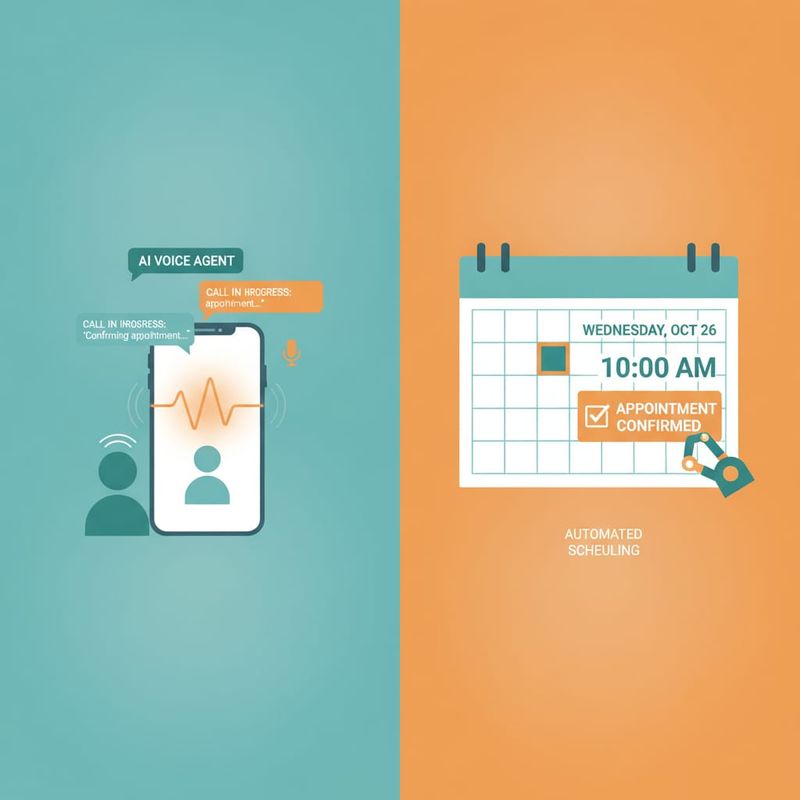
Topcalls runs the full appointment-setting cycle without a rep on the line. The AI calls the lead, qualifies them with a short conversational script, reads your calendar availability in real time, and books the meeting before the call ends. The contact gets a calendar invite immediately. There's no booking link to ignore and no follow-up needed to confirm the slot.
The platform handles 63,000+ calls daily. Sub-500ms voice latency keeps conversations from feeling robotic. 29+ languages cover international campaigns. Automated reminder calls reduce no-shows by up to 60%. Setup takes about 15 minutes for a standard campaign.
- Price: $0.35/min all-inclusive (telephony, AI, voice, CRM sync, calendar booking)
- Calendar: Google Calendar, Calendly, Cal.com (booked live during the call)
- CRM: HubSpot, Salesforce, Pipedrive, Close, Zoho
- Best for: outbound appointment-setting campaigns at scale, 29+ languages
2. Bland AI
Bland is a developer-first AI phone platform. You write the prompt, pick your voice model, connect your telephony, and the platform runs the call. Calendar booking requires a webhook: your code checks availability via the Google Calendar API and creates the event when the contact agrees to a time. For engineering teams that want to own every part of the booking flow, that's workable. For sales teams without in-house developers, it's a significant setup cost before a single meeting is booked.
Bland's base rate starts around $0.09/minute. Add your LLM costs and telephony and real all-in cost typically runs $0.15 to $0.25/min depending on model choices. No built-in no-show reminder system.
- Price: from ~$0.09/min; real all-in cost $0.15 to $0.25/min with LLM and telephony
- Calendar: webhook-based (you build the booking logic)
- CRM: API/webhook (custom integration)
- Best for: engineering teams building a custom booking pipeline
3. Vapi
Vapi is a voice API for developers who want full model flexibility. You choose your LLM (GPT-4o, Claude, Llama, or others), Vapi handles the real-time voice pipeline, and you connect your telephony provider. Calendar booking works via webhook: when the contact agrees to a time, Vapi fires an event your backend handles. Latency is typically under 800ms with a well-tuned setup.
The API rate starts around $0.05/min. Add LLM costs (roughly $0.02 to $0.05/min for GPT-4o) and SIP telephony (around $0.014/min via Twilio) and real all-in cost runs $0.08 to $0.12/min before engineering overhead.
- Price: from ~$0.05/min API; real all-in $0.08 to $0.12/min
- Calendar: webhook-based; you write the availability check and booking logic
- CRM: custom integration via webhook
- Best for: developer teams that need full LLM flexibility
4. Retell AI
Retell AI sits between the no-code platforms and pure API providers. There's a visual agent builder for teams that don't want to write code, and a full API underneath for those who do. Built-in Calendly integration means the agent can check availability and confirm a booking time during the call without custom code. Pricing is usage-based; check their site for current per-minute rates.
- Price: usage-based per-minute; volume discounts available
- Calendar: Calendly (native), Google Calendar
- CRM: Zapier, webhooks, HubSpot via third-party
- Best for: teams that want fast launch with the option to go deeper via API later
5. Synthflow
Synthflow is a no-code AI voice agent builder aimed at small businesses without technical resources. You pick from pre-built templates (including appointment setting), connect your calendar, choose a voice, and publish. The trade-off for easy setup is limited customization when the agent hits a non-standard conversation. Starts at $29/month for limited call minutes.
- Price: from $29/month (limited minutes); higher tiers for volume
- Calendar: Calendly, Google Calendar
- CRM: HubSpot, Zapier
- Best for: small businesses running a simple appointment-setting script without an engineering team
6. Air.ai
Air.ai focuses on longer, more conversational calls than most appointment-setting tools. If your booking process needs a 10-minute discovery conversation before the meeting makes sense to schedule, Air is one of the few platforms built specifically for that length. Calendar booking works via third-party integrations. Pricing is per-minute, enterprise-focused, and requires a quote.
- Price: per-minute, volume-based; enterprise pricing via quote
- Calendar: via third-party integrations (Zapier, webhooks)
- CRM: via integrations
- Best for: long discovery conversations before booking confirmation
7. Orum
Orum is an AI parallel dialer, not an autonomous appointment-setting platform. It dials multiple numbers at once, skips voicemails and disconnected lines, and connects the SDR live when someone picks up. The rep runs every conversation and books the meeting themselves. Orum multiplies dial volume; it doesn't replace the human. Pricing is per-seat, typically in the $100 to $200/seat/month range at enterprise scale.
- Price: per-seat; enterprise pricing via quote
- Calendar: rep books manually via CRM or calendar tool
- CRM: Salesforce, HubSpot, Outreach, Salesloft
- Best for: SDR teams that want more dials without removing humans from the conversation
8. Calendly AI
Calendly is the scheduling automation standard for inbound sales and CS teams. The AI layer adds smart routing (sends the contact to the right team member based on form inputs, territory, or deal size), time optimization suggestions, and meeting-type branching. No outbound phone calls. The contact receives a booking link and picks a time. Works without friction for warm inbound leads who already want to talk. For cold outreach, the link often goes ignored.
- Price: from $8/user/month (Standard); Teams and Enterprise add routing and forms
- Calendar: Google Calendar, Outlook, iCloud; syncs to Zoom, Teams, Salesforce
- CRM: HubSpot, Salesforce, Pipedrive (native integrations)
- Best for: inbound sales, customer success, recruiting; not built for cold outbound calling
9. Motion
Motion is an AI calendar and task manager that auto-schedules meetings based on availability and priorities. It's not a lead outreach tool. Motion helps an individual or team coordinate meeting times across calendars. If you're running outbound sales campaigns, this isn't the right product. If you want AI to manage your own schedule, Motion does that well.
- Price: from $19/month (Individual); Team plans available
- Calendar: Google Calendar, Outlook
- CRM: no native CRM integration
- Best for: individuals managing their own schedule; not suited for outbound sales pipelines
10. HubSpot Meetings + AI
HubSpot Meetings is built into HubSpot CRM. Contacts get a booking link in an email sequence, pick a slot, and the meeting auto-syncs to the deal record. The AI layer adds meeting prep suggestions, follow-up timing recommendations, and email subject line optimization. No outbound phone calls. If your team runs on HubSpot and most leads come through web forms or email nurture, this handles the scheduling side without leaving the CRM.
- Price: included in HubSpot Sales Hub; Starter from ~$20/seat/month, Professional from ~$100/seat/month
- Calendar: Google Calendar, Outlook, Microsoft Teams
- CRM: HubSpot native (meeting auto-syncs to deal and contact records)
- Best for: teams already on HubSpot running inbound or warm lead flows
How does AI appointment setting work?
Voice-based appointment setting starts the moment a lead hits your CRM. Topcalls calls the lead within seconds of form submission, not hours. The AI introduces itself, runs through a qualifying script, and reads your real-time calendar availability to offer specific open slots. When the contact agrees to a time, the platform creates the calendar event and sends the invite before the call ends. Teams that want to qualify leads before booking will find the AI lead pre-screening guide useful. For the full cost breakdown, see cost per appointment: AI vs human SDR.
Scheduling tools like Calendly skip the call entirely. The lead gets a booking link by email or text. They open it, pick a slot, and the meeting is confirmed. This works well for warm inbound leads who already want to talk. For cold outreach, the link gets ignored roughly as often as a cold email does.
The difference that matters: a voice-based system handles the entire 'getting to yes' phase that a link can't. Research from InsideSales.com shows that companies contacting leads within five minutes of a form submission are 100x more likely to connect than those who wait 30 minutes. An AI that calls automatically at 2am when a lead submits a form closes that gap completely.
What does appointment-setter software cost?
Cost structure depends on the tool category. Voice-calling platforms charge per minute. Scheduling tools charge per seat or per month. AI parallel dialers charge per seat at higher rates because they're replacing SDR time, not phone minutes.
Topcalls charges $0.35 per minute with everything bundled. A campaign of 1,000 calls averaging three minutes each costs $1,050 total. A human SDR in the US typically costs $4,000 to $6,000 per month in base salary alone, before benefits or management overhead, and has a hard ceiling on how many calls they can make per day. Use our ROI calculator to model your specific numbers.

The 'cheap' API platforms like Vapi or Bland AI look attractive at $0.05/min until you add your LLM costs (roughly $0.02 to $0.05/min for GPT-4o), your SIP telephony provider (around $0.014/min via Twilio), and the engineering hours to wire the calendar booking logic. Real all-in cost runs $0.08 to $0.12/min, plus developer time that doesn't show up in the per-minute rate.
How much does it cut no-shows?
No-show rates on cold-booked sales appointments typically run 20 to 30%. That number climbs above 40% when the meeting is booked a week or more out. The biggest structural lever isn't the reminder; it's the time gap between booking and meeting.
Topcalls campaign data shows a 60% reduction in no-shows when the platform runs automated reminder calls 24 hours and 2 hours before the meeting. The reminder is short: it confirms the time, gives the contact a chance to press a key to reschedule if they can't make it. Contacts who can't attend reschedule on the spot, which frees the slot rather than leaving a ghost in the calendar.
Calendly's email and SMS reminder system cuts no-shows by 28 to 37%, according to their published benchmarks. That's meaningful for a platform that doesn't make outbound calls. An email reminder is easier to ignore than a phone call, especially for a cold-booked meeting where the commitment level was lower to begin with.
Voice-calling platforms that book meetings quickly after lead capture also take advantage of the time-gap lever without any reminder feature. A meeting booked for tomorrow has a 15 to 20% no-show rate. The same meeting booked for next week runs 35% or higher. Getting the meeting on the calendar fast is the first step; the reminder handles the rest.
Which tool integrates with my calendar?
Every tool on this list supports Google Calendar and Outlook at minimum. Where they differ is how deep the booking goes and whether it happens during the call or after the lead clicks a link.
Topcalls reads real-time availability from Google Calendar, Calendly, and Cal.com during the call. When the contact confirms a time, the booking is created before the call ends and the contact gets an invite immediately.
Vapi and Bland AI support calendar booking via webhook. Your backend handles the availability check via the Google Calendar API and creates the event when the contact agrees to a slot. More flexible, more setup work.
Retell AI has a built-in Calendly integration that handles availability checking without custom code. A good option for teams that want native booking without engineering resources.
Calendly AI is the scheduling layer itself. It manages availability, routes contacts to the right team member, and handles the entire booking flow via links. Pairs well with email sequences and inbound forms.
HubSpot Meetings embeds booking directly into HubSpot contact records, email sequences, and deal cards. Meetings auto-sync to deals with no extra steps, which is the main advantage for teams already running on HubSpot.
Where to go next: see how the AI voice agent platform runs the full appointment-setting workflow, compare it with the best AI receptionist software for inbound calls, then run your own numbers in the ROI calculator.
If you're running outbound sales, the decision comes down to whether you need the phone call handled or just the booking managed. Scheduling tools cover the second half. Topcalls handles both. Book a strategy call and we'll show you what an appointment-setting campaign looks like on your target list.
Frequently Asked Questions
Get AI calling tips in your inbox
No spam. One email per week with actionable sales automation tips.